
Would You Ignore a 3-Inch Structural Deflection?
When a Small Discrepancy Becomes a Big Responsibility
In our work, core values aren’t just words on a wall, they guide how we approach every project, every decision, and every challenge. From serving everyone to producing quality, we rely on principles like integrity, accountability, and courage to shape our daily actions. Even small decisions, like how we handle a subtle deviation in a building model, are influenced by these values. They remind us that our work impacts not just the drawings we produce, but the people who build, occupy, and rely on the spaces we model.
Produce Quality: Seeing Beyond the Numbers
During a recent Scan to BIM project, our team noticed a beam in the basement that was off by 2–3 inches. On paper, it might have seemed minor. Models have tolerances, and field conditions rarely align perfectly. Floors settle, walls bow, beams shift subtly over time. Yet this wasn’t a finish detail. It was a load-bearing element. Even a small deviation in a structural system can carry serious long-term implications.
At what point does a “small discrepancy” become a big responsibility? That question drives our commitment to produce quality. Quality isn’t just about clean files or visual perfection, it’s about careful judgment, context, and diligence. It’s about questioning the data when something doesn’t feel right and ensuring that the decisions we make today stand the test of time.
Courageously Take Risks: The Discipline to Pause
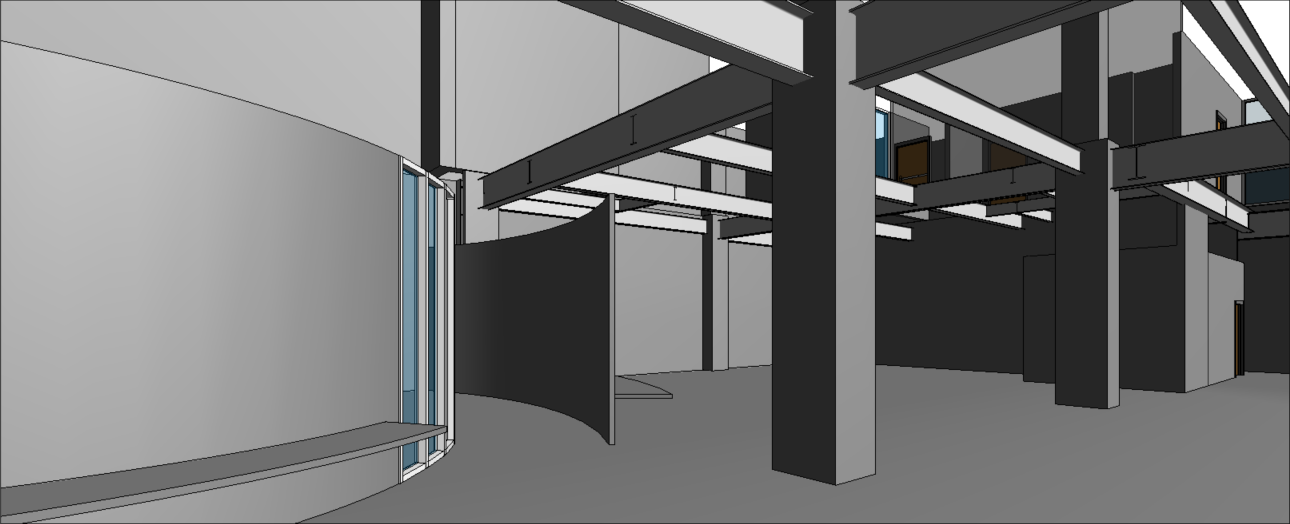
When we noticed the deflection, we didn’t dismiss it as noise in the data. We verified the scans, checked control points, and compared against as-built drawings. We asked: Is this within modeling tolerance, or does it signal potential risk?
It could have been categorized as acceptable and documented without further discussion. Deadlines were approaching. Schedules were tight. It would have been easy to move forward. But producing quality sometimes means slowing down to protect the project in the long term. It requires discipline and the courage to step back, challenge assumptions, and make difficult calls.
By speaking up and sharing the finding with the project team, what seemed like a minor deviation ultimately prevented a potential hazard. It was a small moment where courageously taking risks ensured safety, accountability, and trust.
Lay Bricks of Trust: Quality as a Choice
Scan to BIM, when done thoughtfully, becomes more than documentation. It becomes risk management, a safeguard and a second set of eyes on the built environment. It allows us to notice what might otherwise be missed and encourages teams to ask difficult questions.
We rely on structured QA/QC, peer reviews, and clearly defined thresholds to protect against complacency. Producing quality is a conscious choice. It means caring enough to pause, speaking up when something feels uncertain, and holding one another accountable.

In the end, trust is built not through flawless drawings, but through consistent attention, thoughtful decisions, and accountability. Small discrepancies can carry big responsibilities, and taking them seriously is how we lay bricks of trust—one careful decision at a time.
Making Every Detail Count
In the end, producing quality and taking responsibility is not about perfection or appearances. It is about commitment, awareness, and care. Every project we work on, every model we build, and every small detail we notice is an opportunity to serve others, protect those who rely on our work, and uphold the trust we have earned. By integrating our core values into every step, questioning what seems small, pausing when necessary, and speaking up when something feels uncertain, we ensure that our decisions today create safe, resilient, and meaningful spaces for the future. Small discrepancies may seem insignificant, but the attention, courage, and accountability we apply to them build more than structures. They build trust, credibility, and a lasting impact that extends far beyond deadlines, drawings, or digital files.