
You know you need another person on the team. You post the job, start reviewing applications, schedule interviews, and wait. But while you're trying to find the right person, the work keeps coming in.
We hear this from clients all the time. They need another engineer, architect, designer, or project manager, but finding the right person can take weeks or even months.
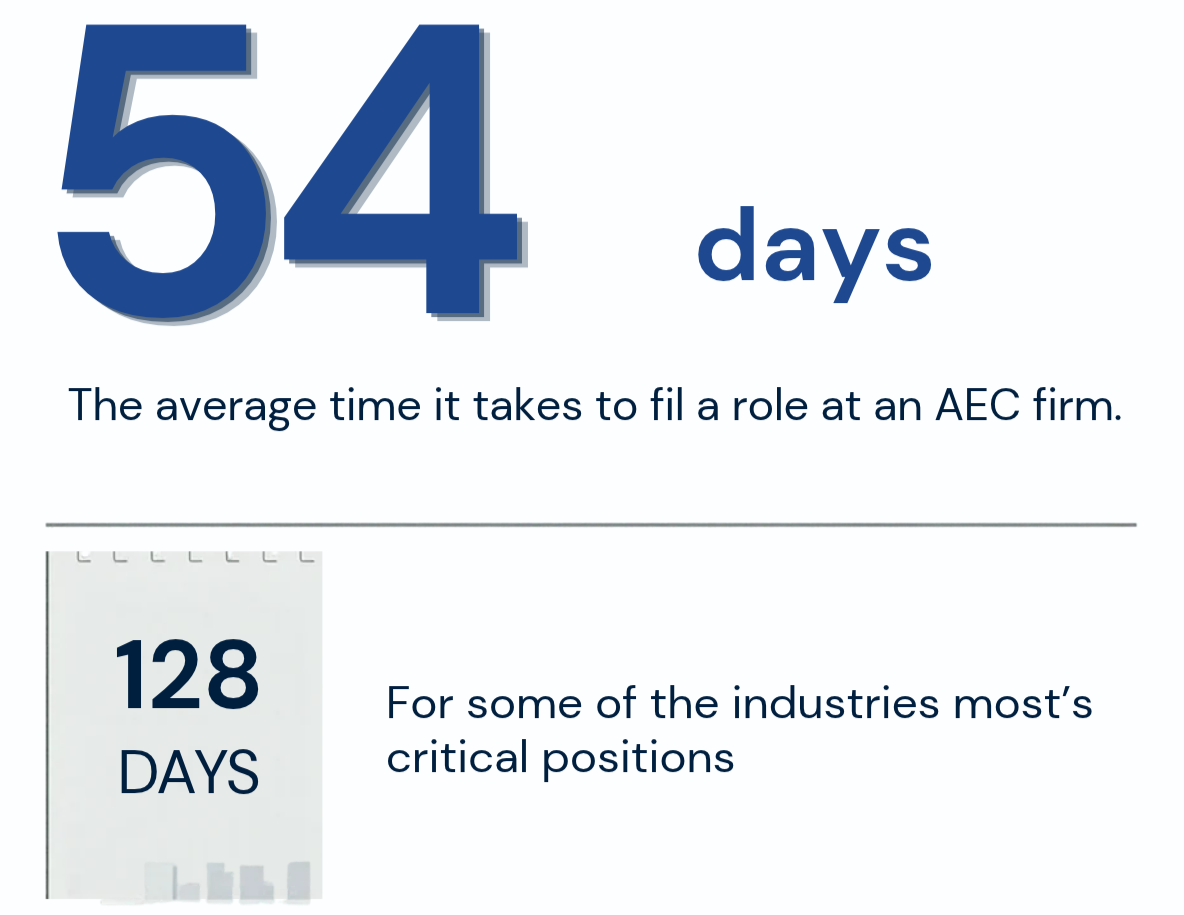
According to Zweig Group's 2026 Workforce Policies + Practices Report, filling a role at an AEC firm takes an average of 54 days. For some of the industry's most critical positions, that number rises to 128 days.
That's more than four months for some roles. And all the while, the projects and deadlines that made the extra hire necessary are still there.
So, What Happens While You Wait?
The work doesn't pause just because a position is open. Clients still need answers, deadlines keep getting closer, and new projects don't always arrive at convenient times.
More often than not, the existing team picks up the slack. A senior engineer gets pulled back into production work. A project manager takes on tasks they would usually delegate. An architect ends up handling work that someone else could have taken off their plate.
At first, people usually find a way to make it work. But as the weeks go by, the extra work adds up. And even after a new person joins, the pressure doesn't disappear overnight. By then, the team may have spent months working around the gap.
It's a challenge across the industry, not just at a few firms. Zweig Group's 2025 Recruitment & Retention Report found that 83% of firms see professionals with three to ten years of experience as their biggest staffing need. Meanwhile, 67% are already using external recruiters to help find the people they need.
The need for talent is clear. The difficult part is finding the right people when the work needs to get done.
What If You Don't Have to Wait?
Hiring the right person still matters. For many firms, bringing someone on permanently is absolutely the right move, and nothing here is meant to suggest otherwise.
But just because you need a permanent hire doesn't mean every project has to wait until that person arrives.
There are a few ways we've seen clients manage the gap in the meantime
1. Fill the Gap While You Hire
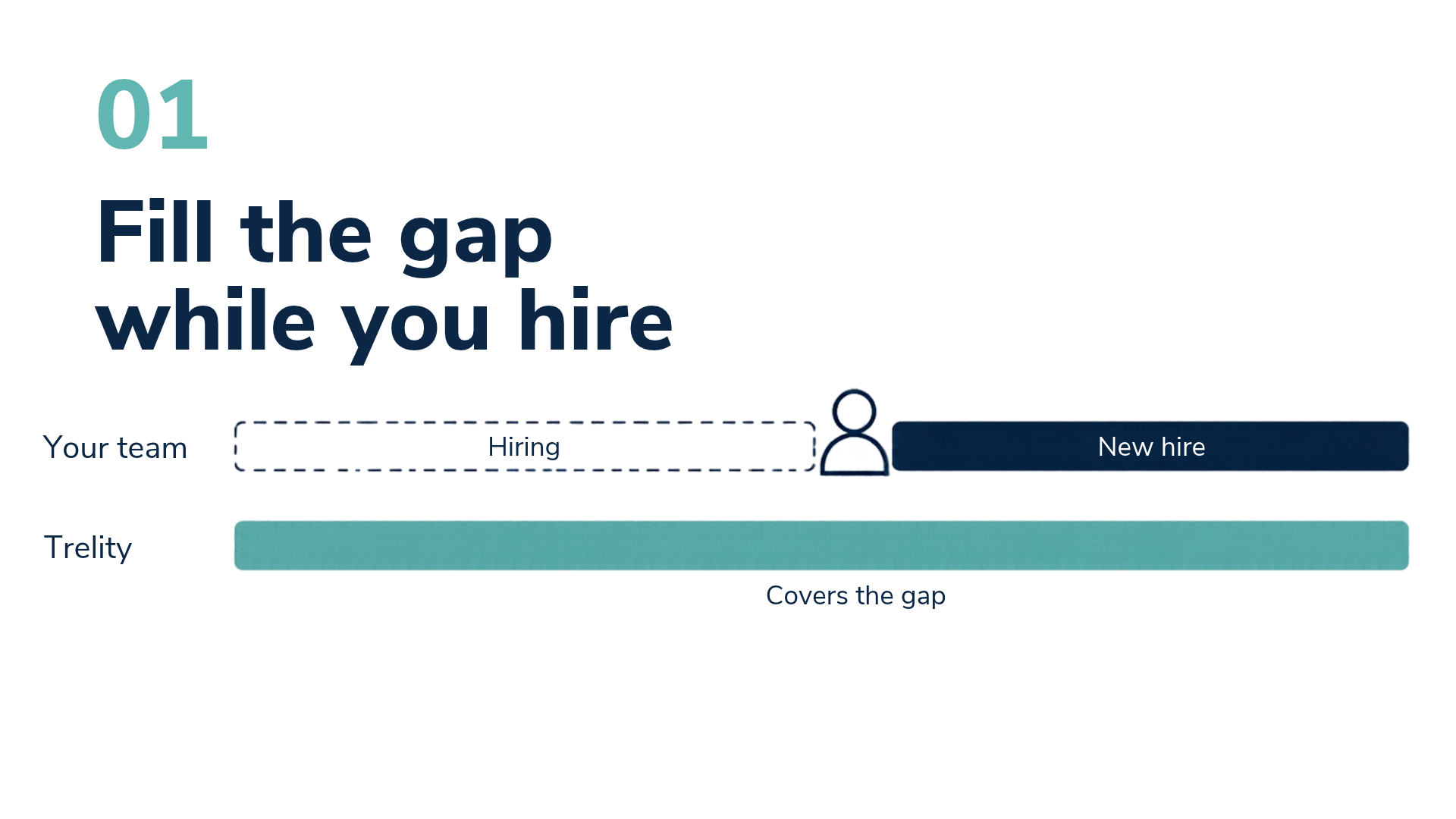
Sometimes a firm knows it needs a permanent employee. The hiring process is already underway, but there are projects that need attention now. Rather than asking the existing team to carry everything until the role is filled, the firm brings Trelity in to help with the workload.
We take on the production work that needs to move forward, while the client continues looking for the right full-time hire. Once that person joins and gets settled in, the work can be handed over.
That gives the firm breathing room to make the right hiring decision, instead of rushing to fill a role simply because the pressure has become too much.
2. Add Dedicated Remote Capacity
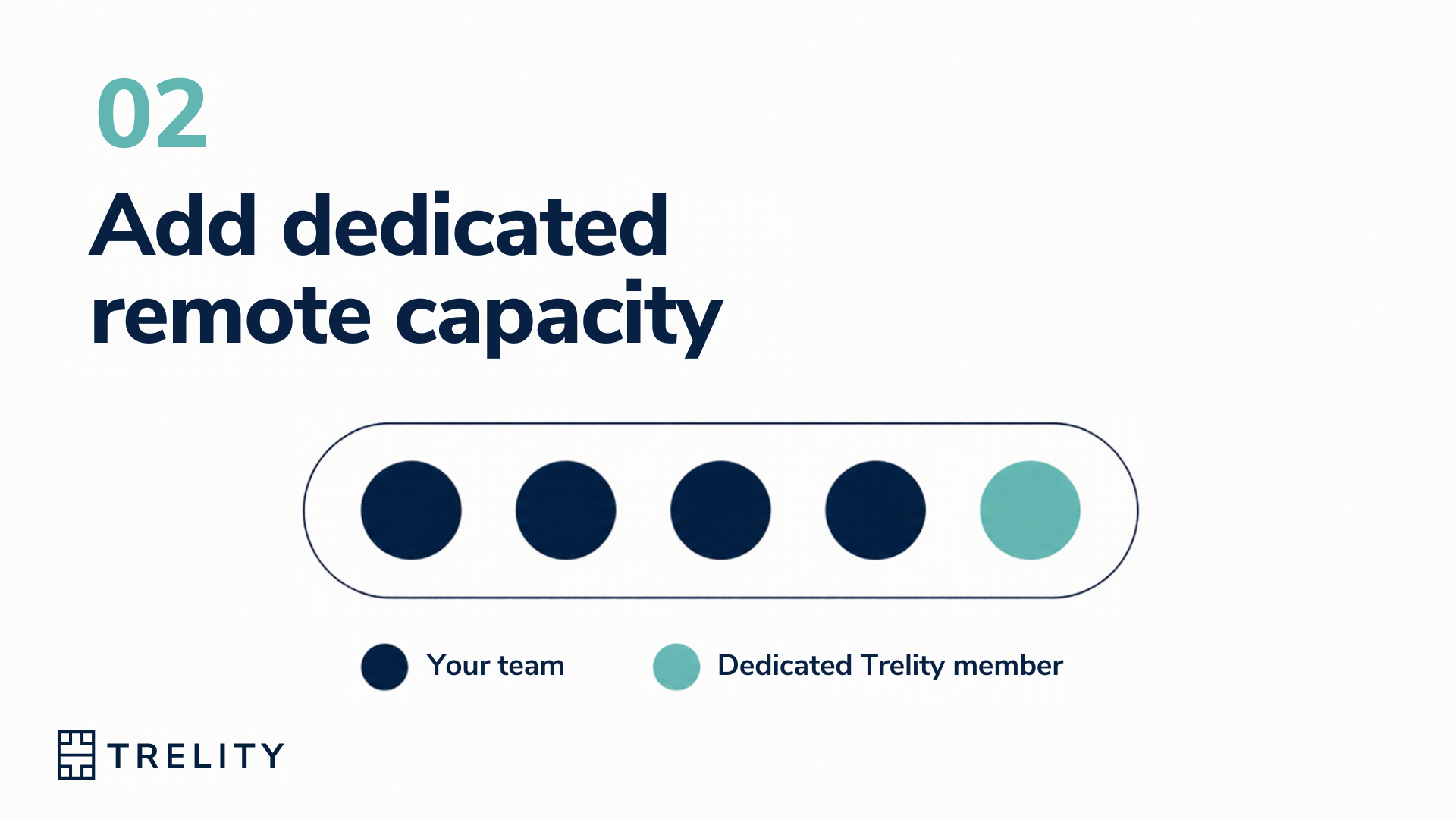
In other cases, the need isn't temporary. There's enough ongoing work to justify adding another person to the team, but finding someone locally could take months. The projects, of course, can't always wait that long.
That's where a dedicated Trelity team member can help. They work as part of the client's wider team, while we take care of the day-to-day support, accountability, and professional development. The client can stay focused on the technical work, project requirements, and priorities.
It also gives firms more options. Instead of searching only within the local talent pool, they can bring in the capacity they need from outside it.
We saw this with an As-Built Modeling & Retrofit program for a global retail brand. The client needed more than 50 locations modeled and updated to reflect design changes, all within less than two months.
We came in to help the client meet that timeline and quickly became an extra set of hands across the program.7 Within the first week, our teams had already established daily standups, scheduled to fit the client's morning and the end of our workday. It helped everyone stay in sync, share updates, and deal with questions as they came up.
What began as an urgent request for extra support grew into a longer-term working relationship. Being there when the client needed help most gave both teams the chance to build trust and find a way of working together that felt natural.
We're still supporting the client today as an extension of their team, helping them keep work moving as needs change.
3. Give Your Senior People Their Time Back
Sometimes, the answer isn't to hire another senior person. It's to look at how the senior people on your team are spending their time.
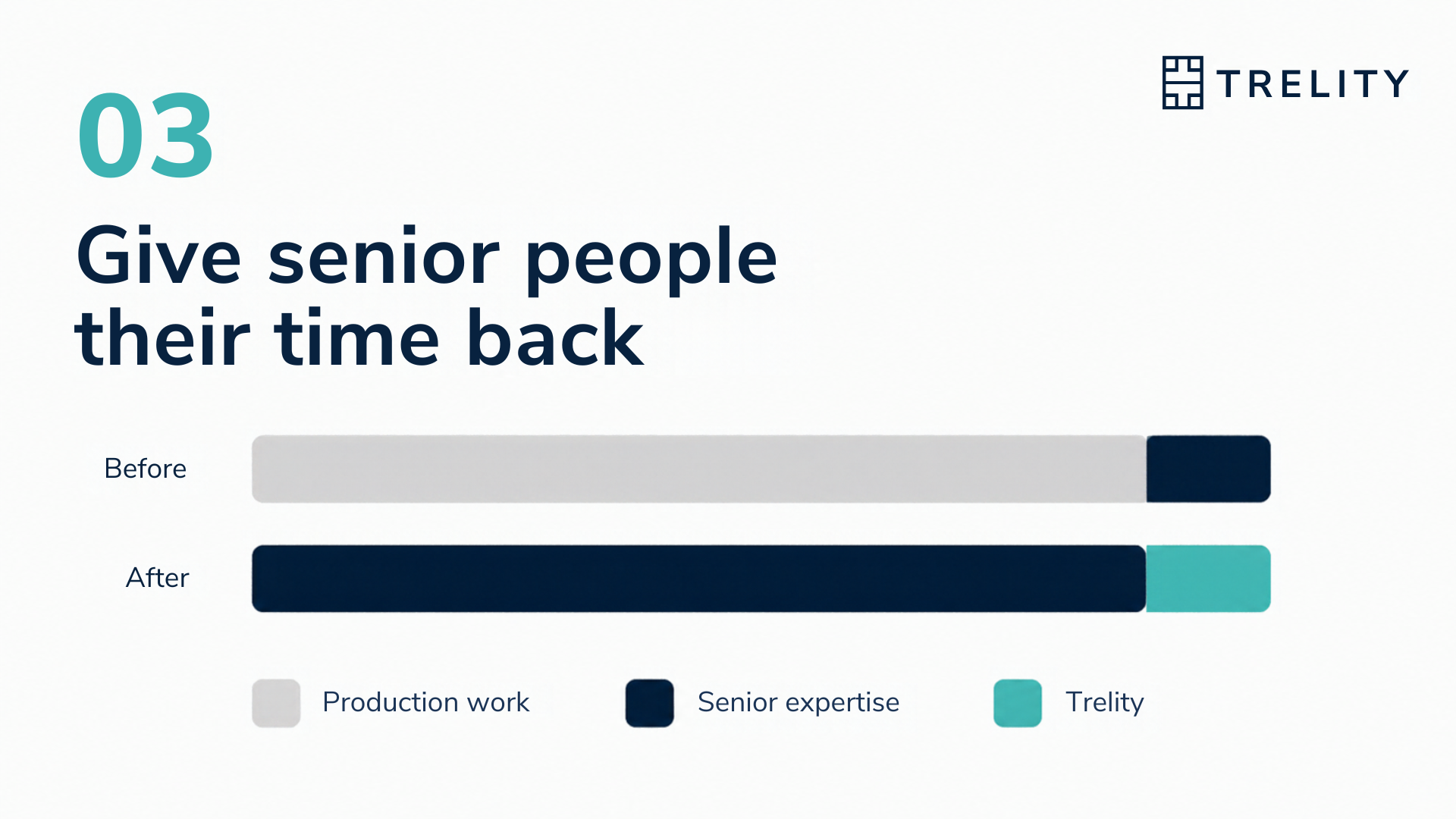
When a team is stretched, experienced employees often end up doing production work, repetitive tasks, or standardized deliverables simply because no one else has the capacity to take them on.
Some of that work can be handled by a trusted external team. That gives senior staff more time to focus on the parts of the job where their experience makes the biggest difference: working with clients, reviewing deliverables, solving complex problems, and helping bring in new projects.
The point isn't just to get more work out the door. It's to make sure people have the time to do the work they're best placed to do.
The Hire Can Still Be the Plan
Working with a remote team doesn't mean giving up on hiring. If a permanent employee is what the business needs, keep looking for the right person.
In the meantime, projects still need to be delivered. And even after someone joins, the workload may be more than the local team can comfortably manage on its own.
We see Trelity fitting into that picture in different ways. Sometimes we help cover a gap while a firm hires. Sometimes we provide dedicated, ongoing capacity. And sometimes we take production work off the team's plate so experienced people can focus on the work that needs them most.
Finding the right person takes time. The work can't always wait.
Sources
Zweig Group, 2026 Workforce Policies + Practices Report